Assessment Overview
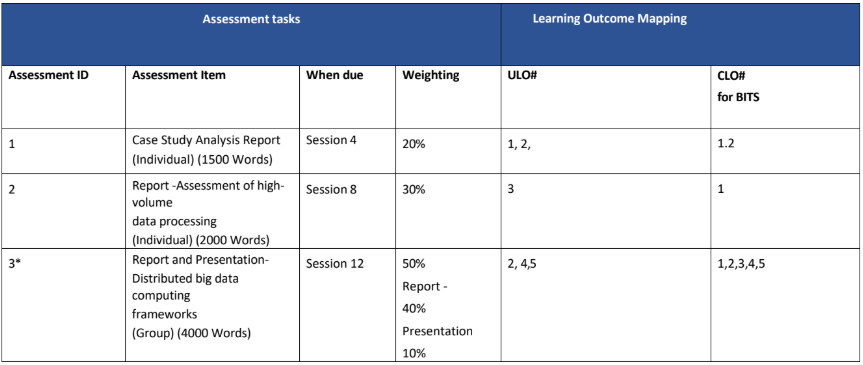
Note: *means it is hurdle assessment and 40 % marks are required to pass this assessment and 50 % in overall assessments to pass the unit
Submission Instructions
All submissions are to be submitted through Turnitin. Drop-boxes linked to Turnitin will be set up in Moodle. Assessments not submitted through these drop-boxes will not be considered. Submissions must be made by the end of the session indicated on this Unit Assessment Guide.
The Turnitin similarity score will be used to determine any suspected plagiarism in your submitted assessment. Turnitin will check conference websites, journal articles, online resources, your peer’s submissions, and possible work by generative artificial intelligence (AI) for similarity. You can see your Turnitin similarity score when you submit your assessments to the appropriate drop-box. If your similarity score is of concern, you can change your assessment and resubmit. However, re-submission is only allowed before the submission due date and time. You cannot make re-submissions after the due date and time have elapsed.
Please Note:All work is due by the date and time listed in this Unit Assessment Guide. Late submissions will be penalised at 20% of the assessment final grade per day, including weekends.
Referencing guides
You must reference all the sources of information you have used in your assessments. Please use the IEEE referencing style when referencing in your assessments in this unit. Refer to the library’s referencing guides for more information.
Academic misconduct
VIT enforces that the integrity of its students’ academic studies meets an acceptable level of excellence. VIT will adhere to its VIT Policies, Procedures and Forms which explain the importance of staff and student honesty in relation to academic work and outlines the kinds of behaviours that are considered "academic misconduct" including but not limited to plagiarism.
Late submissions
In cases where there are no accepted mitigating circumstances as determined through VIT Policies, Procedures and Forms, late submission of assessments will lead automatically to the imposition of a penalty. Penalties will be applied as soon as the deadline is reached.
Short extensions and special consideration
Special Consideration is a request for:
- • Extensions of the due date for an assessment, other than an examination (e.g. assignment extension).
- • Special Consideration (Special Consideration in relation to a completed assessment, including an end-of-unit Examination).
Students wishing to request Special Consideration in relation to an assessment task must engage in written emails to the unit lecturer to Request for Special Consideration as early as possible and prior to the start time of the assessment due date, along with any accompanying documents, such as medical certificates pertaining to your current situation.
Inclusive and equitable assessment
Reasonable adjustment in assessment methods will be made to accommodate students with a documented disability or impairment. Contact the unit teaching team for more information.
Contract Cheating
Contract Cheating is a serious form of academic misconduct and is not tolerated by VIT under any circumstances.
Contract cheating usually involves the purchase of an assignment or piece of research from another party. This may be facilitated by a fellow student, friend, or purchased on a website. Other forms of contract cheating include paying another person to sit an exam in the student's place.
Contract cheating warning:
- • By paying someone else to complete your academic work, you don’t learn as much as you could have if you did the work yourself.
- • You are not prepared forthe demands of your future employment.
- • You could be found guilty of academic misconduct.
- • Many for profit contract cheating companies recycle assignments despite guarantees of “original, plagiarism-free work” so similarity is easily detected by Turnitin.
- • Penaltiesfor academic misconduct include suspension and exclusion.
- • Students in some disciplines are required to disclose any findings of guilt for academic misconduct before being accepted into certain professions.
- • You might disclose your personal and financial information in an unsafe way, leaving yourself open to many risks including possible identity theft.
- • You also leave yourself open to blackmail - if you pay someone to do an assignment for you, they know you have engaged in fraudulent behaviour and can always blackmail you.
Grades
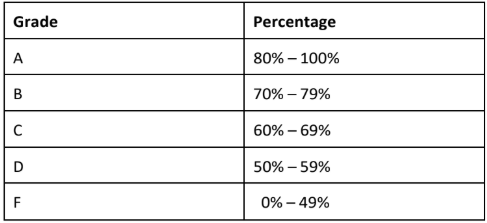
We determine your gradesto the following Grading Scheme:
Assessment details
Assessment 1: Case Study Analysis Report

Objective(s)
This assessment item relates to the unit learning outcomes as in the unit descriptor. This assessment is designed to improve student research and writing skills and to give students experience researching (research journals) on a specific topic relevant to subject/unit. Students are required to conduct a comprehensive literature review addressing contemporary issues/challenges in Big Data analytics in information design and analyze how big data architecture helps in various areas. In addition, students must critically analyze academic journal articles and apply their findings through a structured case study analysis.
Assessment description
This assessment will be completed by individuals. In this assessment you are required to conduct in depth research-based analysis of real-world examples of Big Data from academic journals/research publications, industry reports in varies areas like education, health care, finance. You will analyze how big data and methods are applied to solve complex issues and challenges. You can choose any 3-4 research papers on same technology/area and with the help of tutor. Each student must decide on a topic and email their topic within 2 weeks to the respective Tutor for approval. This assessment is worth 20% of the unit’s grade
This assessment is worth 20% of the unit’s grade. Students are advised to begin working on this assessment as soon as you have your topic approved.
Deliverable Description
Below are a description of the deliverables and the requirements
Submission
The deadline forsubmitting the draft is in week 4, and it will be structured into the following sections:
- • Introduction
- • Literature review
- • Case Study Analysis
- • Architecture, Tools and methodology
- • Findings & discussions
- • References
The final submission of your paper is due in week 4
The final submission should be no less than 1500 words.
Please include 10 references and report should be as per IEEE format.
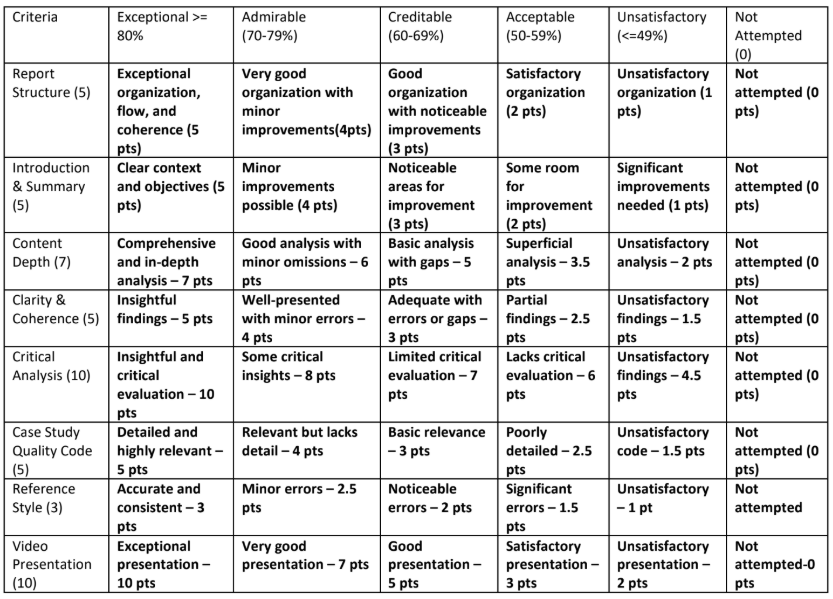
Marking Rubric
Assignment 2 Overview
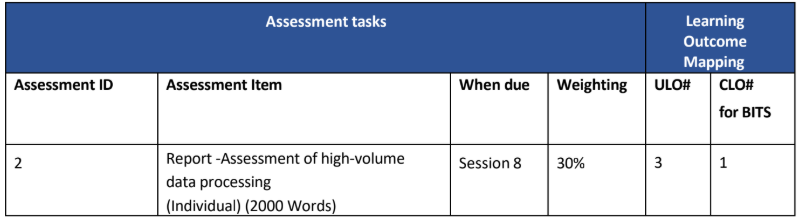
Assessment 2
Tableau & Splunk Project
The Assignment consists of a research report of 2000 words Due Week 8 and weightage 30%.
Problems to be addressed in the report
Higher education institutions and organizations have high volumes of heterogenous data with volume, velocity, variety, variability and value. You will design, implement and implement scalable solutions to help with strategic and operational decision making for student information systems (student retention, course viability, resource allocation)
Part A: Scenario: Multi Campus university big data Analytics
A university operating across multiple campuses in Australia processes:
- • 10+ years of student enrolment data
- • Learning Management System (LMS) logs
- • Financial records
- • Attendance and engagement data
- • Demographic information
University is experiencing issues like; Slow retention analysis, no predictive attrition modelling, Fragmented reporting systems, no real-time academic performance insights, Increasing data volume each semester Your responsibilities include analyzing the data, applying any required transformations, and facilitating the extraction of valuable insights from the processed data.
You must design and implement a scalable high volume data solution.
Task 1: Problem analysis
- • 5Vs of Big Data
- • Data growth challenges
- • Processing bottlenecks
- • Limitations of traditional RDBMS systems
- • Batch vs real-time requirements
Task 2: Distributed processing
- • Load large-scale dataset (Kaggle student dataset or simulated multi-year dataset)
- • Perform distributed transformations:
- i. Cleaning & preprocessing
- ii. Aggregations
- iii. Cohort analysis
- iv. Campus-wise enrolment growth
- v. Implement: Partitioning strategy, Caching strategy
Task 3: Visual analytics using Tableau
Create a dashboard showing:
- • Retention by program and enrolments
- • Demographic breakdown
- • Performance analysis & distribution
The research report must have the format:
- 1. Table of contents
- 2. Institute detail/information (Executive Summary)
- 3. Problem Identification
- 4. Implementation
- 5. Tableau visualisation report
- 6. Analysis and Discussion
- 7. Recommendations
- 8. References
(include diagrams whenever possible big data architecture)
Part B:
In this part of the assessment, you must analyze the log details of the Student Enrollment System in Australia with Splunk
- a) Execute a search to identify all failed login attempts in the last 24 hours. Export the results as a report.
- b) Identify the top 10 IP addresses generating the highest number of events. Present the results in tabular format.
- c) Create a query to calculate the average response time per host.
- d) Filter events that occurred between two specific timestamps and display only the host and source fields.
- e) Take a screenshot of your ‘Activity Jobs Menu’ detailing the current job saved with expiration date
- f) Take a screenshot of your search history. Set a filter to narrow down your search results.
- g) Show where selected fields are, interesting fields and all located. How do you use fields to perform a search.
- h) How do you add time range when performing search.
This assignment consists of two integrated parts:
- o Part A: Tableau Research Report (Business Data Analysis)
- o Part B: Splunk Practical Exercises (Network Log Analysis)
Screenshot requirements:
- • Screenshots must clearly show the full Splunk interface (not cropped too tightly).
- • Your Student ID and the current date must be visible on every screenshot.
- • Screenshots should be pasted directly into the report under each task (a–h), followed by your short explanation.
- • Screenshots without Student ID visible will not be accepted.
Additional information regarding this Assessment:
• Report document standards
- o Normal font is Calibri, size 11 point for the body of all documents with the text fully justified.
- o Headings should not exceed 14 points in size except on a title page where larger fonts are appropriate for the title of a report.
- o Documents should use 1.15 spacing within a paragraph and have an 8-point space between paragraphs
- o Footers should be created on the report that includes a page number.
- o Up to 15% of the Report contents may be quoted or paraphrased from other sources provided you with knowledge and cite the original source of the material you use.
- o Use IEEE referencing all quoted or paraphrased material.
- o The marking criteria are described in the next few pages.
Marking Guide:
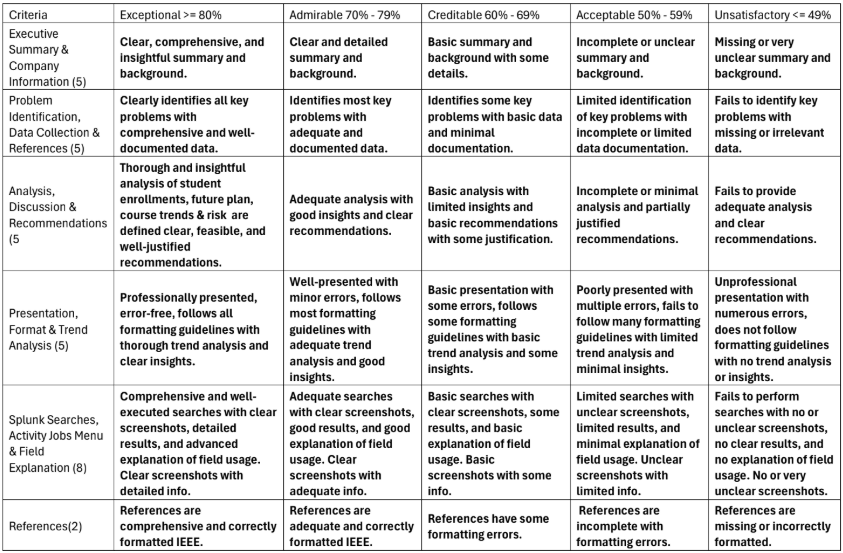
Assignment 3 Overview
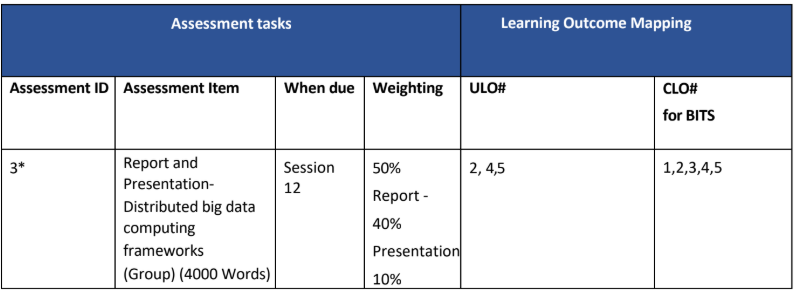
Assessment 3: Distributed Big Data Computing Frameworks Assessment
Total: 50% (Report: 40%, Presentation: 10%)
Report: 40%
Objective(s):
This assessment focuses on understanding big data frameworks and real-world applications. Students aim to enhance research, analytical, teamwork, and communication skills through critical evaluation of contemporary big data technologies.
- • You will be working in group 3-4
- • Apply theoretical knowledge to real world applications
- • Evaluate with critical thinking different frameworks and analyze strengths and limitations
- • Collaborate effectively within team to produce expected results
You are a Big Data Consultant hired by an organization processing large-scale data in ONE of the following domains:
- • Financial transactions
- • Smart city sensor data
- • Healthcare patient records
- • E-commerce customer behavior
The organization is experiencing: Slow processing, Scalability limitations, Real-time analytics constraints, Data pipeline bottlenecks Your task is to:
- 1. Compare two distributed big data frameworks.
- 2. Case study analysis of frameworks on choosing one industry
- 3. Justify your framework selection criteria
- 4. Evaluate performance, scalability, governance, and innovation aspects.
Framework selection (students can choose any two): Apache Hadoop, Apache Spark, Apache Kafka, Apache Flink.
Presentation: 10 %
Students must:
- • Present architecture comparison
- • Justify selected frameworks for case study
- • Demonstrate understanding (not reading slides)
Slides: 12–15 slides maximum
Note: Students are permitted to use AI tools for installing frameworks. However, the writing of the assessment must be completed independently and in your own words.
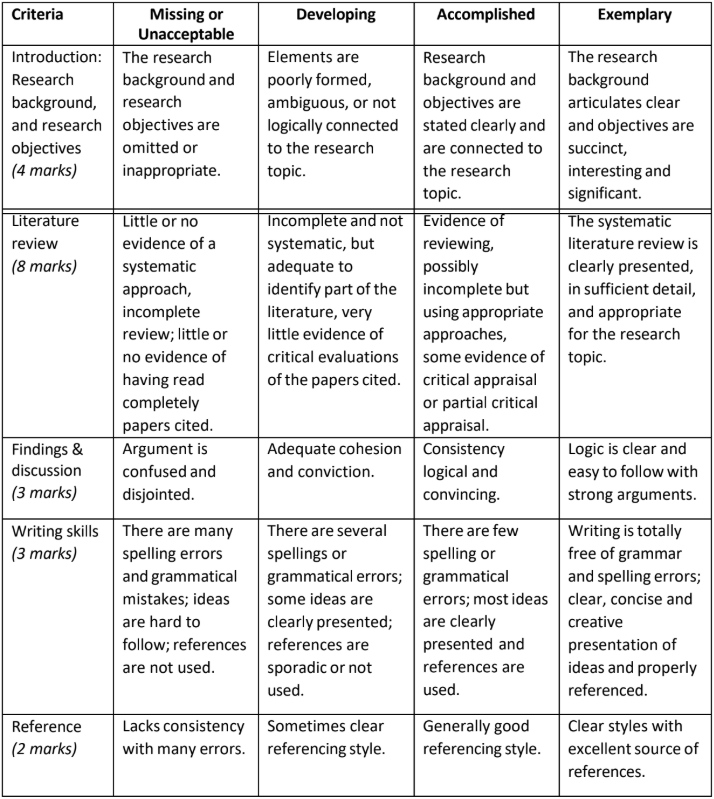
Marking Rubric